

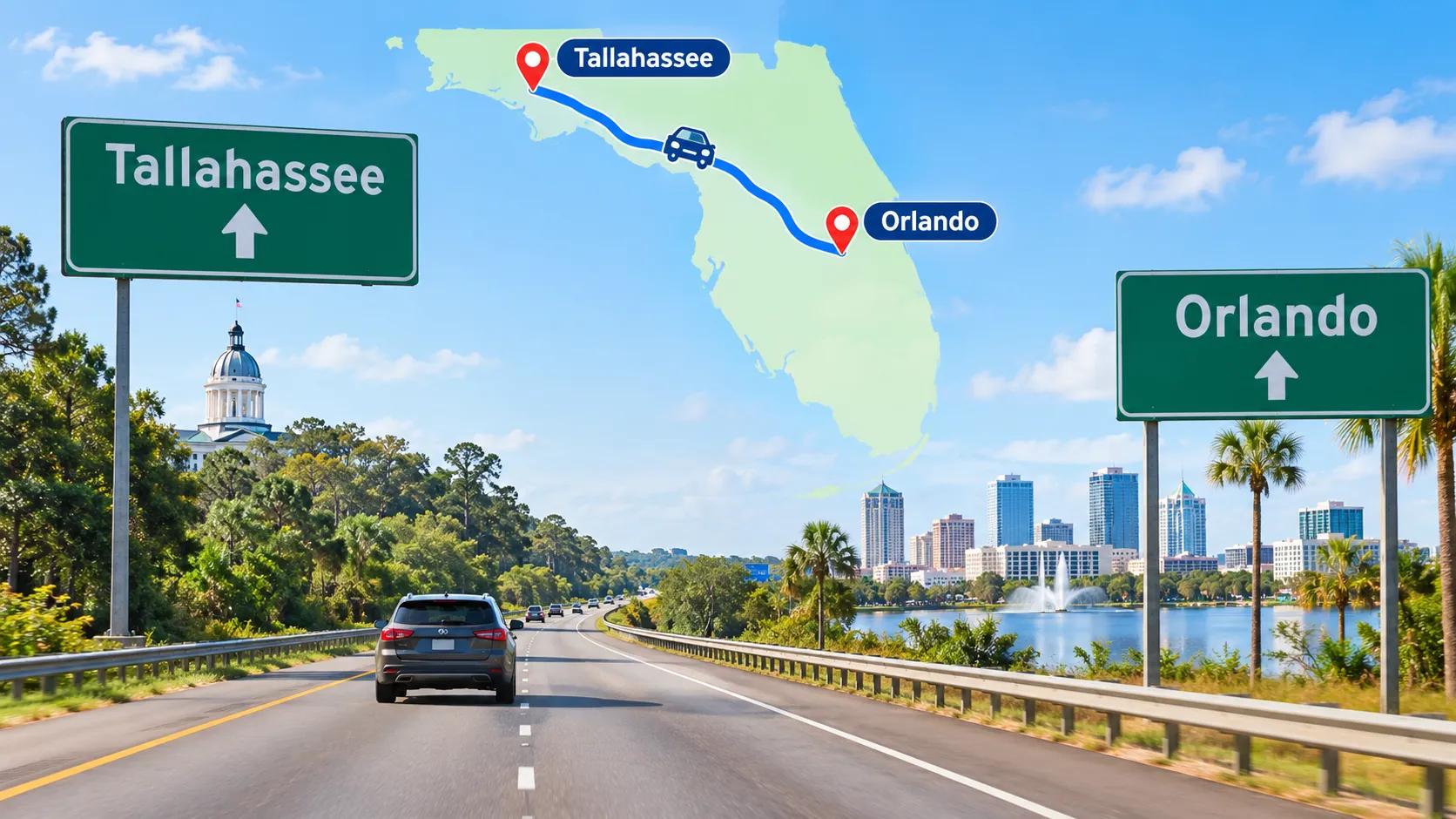
Tallahassee to Orlando Drive
Planning the Tallahassee to Orlando Drive starts with more than calculating distance. Travelers need to consider route selection, traffic, weather, vehicle condition, fuel, rest stops, and the exact destination in Orlando.
The journey is roughly 250–260 miles by road, although the distance can vary according to the route. A general driving estimate may be around four hours in favorable conditions, but actual travel time can change considerably.
Check the Exact Destination
Orlando is not a single compact destination. Hotels, attractions, businesses, residential areas, and the airport are distributed across a broad metropolitan area.
Entering the exact destination into navigation can produce a more useful route and arrival estimate.
This is especially important when a traveler has a scheduled hotel check-in, event, appointment, or flight.
Check the Route
The drive time from Tallahassee to Orlando depends partly on the route selected. Interstate highways provide major connections across Florida, while U.S. highways can offer alternative routes.
Current navigation information may recommend a different route from one day to the next because of traffic or road conditions.
Review the route before departure and keep navigation available during the trip.
Check Traffic
Traffic should be considered before leaving rather than after the journey has started.
Congestion may occur near urban areas, major interchanges, construction zones, and popular destinations. Holiday and weekend travel can also change normal patterns.
If the trip has a fixed arrival time, allow extra time rather than relying on the minimum estimated journey duration.
Check the Weather
Florida weather can be unpredictable. Rain and thunderstorms can affect visibility and road conditions.
A weather check should cover both Tallahassee and Orlando, but also the route between the two cities. Conditions may be different in different parts of the state.
If severe weather is expected, reconsider the departure time and monitor conditions during the journey.
Prepare Fuel and Charging Plans
Fuel planning is a simple part of a road trip, but it is also something that travelers can easily overlook when focusing on routes, attractions, hotels, and other details. Before setting out, drivers should have a general idea of where they are likely to stop for fuel and should avoid waiting until the fuel gauge is nearly empty. Knowing where reliable fuel stations are located along the route can provide greater flexibility if traffic, detours, or unexpected delays increase the distance between stops.
It is also useful to consider the type of driving involved. Long stretches of highway may have fewer convenient fuel options than urban areas, while busy tourist destinations can make it harder to find a convenient station when needed. Planning a fuel stop around a meal, rest break, or other planned stop can make the journey more efficient and reduce the need for an unplanned detour.
Electric vehicle drivers need to take an additional step when planning a journey because charging becomes part of the overall travel time. Drivers should identify suitable charging locations along the chosen route and consider how far the vehicle can travel on its available charge under realistic driving conditions. Factors such as traffic, weather, driving speed, air-conditioning use, and luggage can affect the actual range.
Plan Rest Stops
A road trip should include reasonable breaks. Even when the navigation estimate suggests a certain arrival time, travelers may need to stop for food, water, restrooms, or stretching.
Rather than selecting an arbitrary number of stops, plan around personal comfort and driving conditions.
Select a Suitable Vehicle
The vehicle can affect comfort throughout the journey. Travelers with several passengers or substantial luggage may need more space.
For rental vehicles, check:
Passenger capacity
Cargo space
Fuel type
Rental policies
Pickup location
Return location
Mileage rules
One-way conditions where applicable
Understanding these details before leaving can prevent confusion later.
Think About Orlando Parking
Parking should be researched before arriving in Orlando, especially if you plan to drive to hotels, theme parks, attractions, restaurants, or entertainment districts. Parking arrangements can vary considerably from one destination to another, and some locations may have designated parking areas, time restrictions, parking fees, or specific rules for visitors.
If you are staying at a hotel, check in advance whether parking is available on-site, whether it is included in the room rate, and whether an additional daily parking fee applies. Some hotels may offer self-parking, valet parking, or limited parking spaces, so understanding the options before arrival can help avoid surprises.
Visitors heading to major attractions should also check where they are expected to park and how far the parking area is from the entrance. Large attractions may have extensive parking lots or garages, and reaching the main entrance may require a shuttle, tram, or additional walking. It is useful to allow extra time for parking, particularly during busy periods.
Keep an Updated Plan
The best road-trip plan is flexible. The initial route is only a starting point.
Traffic, weather, construction, and road incidents can change the recommended route. Travelers should remain willing to adjust their timing when conditions change.
At the transportation-planning stage, Car Rental Tallahassee may also be relevant for travelers who need to compare vehicle types before beginning the journey.