

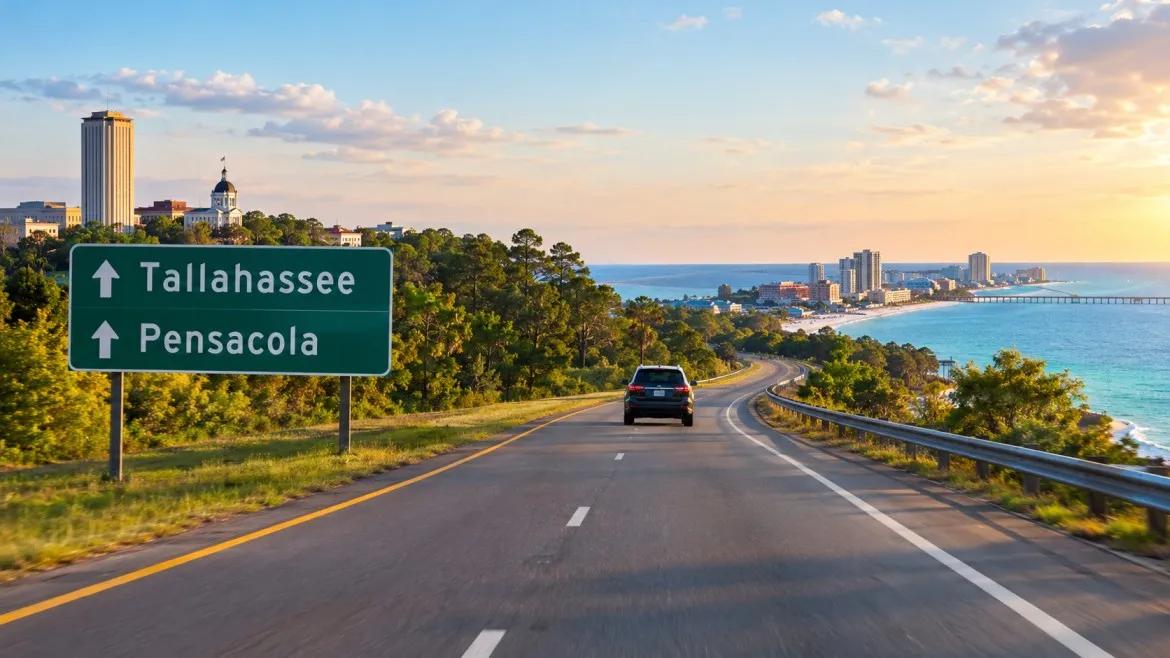
A road trip across Florida’s Panhandle can be a convenient way to combine city travel with outdoor activities and coastal relaxation. The Tallahassee to Pensacola Drive takes travelers west from Florida’s capital toward a city recognized for its beaches, history, and waterfront attractions. Understanding the distance, fuel requirements, and potential stops helps drivers prepare a realistic travel budget.
The journey can usually be completed in a few hours without lengthy breaks, but the experience becomes more flexible when the itinerary includes time for food, sightseeing, or rest.
How Many Miles Separate Tallahassee and Pensacola?
The road distance is generally around 190–200 miles, depending on the starting location, destination, and route. Interstate 10 West is the primary choice for many drivers because it provides a direct highway connection across the Panhandle.
The estimated driving time is approximately three to three-and-a-half hours in favorable conditions. Congestion, construction, rain, and stops can extend the trip, so the estimate should be treated as a planning guide rather than a guarantee.
Before leaving, travelers should enter their exact starting point and destination into a navigation app. This provides a more useful estimate based on current road conditions.
Estimating Gas Costs
Fuel costs depend on three main factors: distance, fuel efficiency, and the price of gasoline. A vehicle that uses less fuel per mile will generally cost less to operate over the same route.
For example, a vehicle averaging 30 miles per gallon would use approximately 6.5 gallons to cover 195 miles. The actual fuel expense can be estimated by multiplying that amount by the local price per gallon. Additional driving for restaurants, parks, and beach visits should be included in the budget.
Drivers should also consider whether the vehicle needs premium fuel and whether a rental agreement requires the vehicle to be returned with a particular fuel level. Checking these details before departure can help avoid unexpected expenses.
Scenic and Outdoor Stops
Travelers who have extra time may choose to stop at an attraction rather than drive directly to Pensacola.
Florida Caverns State Park
Near Marianna, Florida Caverns State Park is known for its limestone cave formations and outdoor recreation. Guided cave tours may be available, but schedules and access can change. Checking official park information before the trip is recommended.
Falling Waters State Park
Falling Waters State Park, near Chipley, offers a natural setting centered on a waterfall that flows into a sinkhole. Rainfall affects the amount of water visible, so conditions may differ from one visit to another.
DeFuniak Springs
Depending on the route, DeFuniak Springs can provide an opportunity to pause in a historic Panhandle community. Travelers interested in local architecture and a slower pace may find it a useful addition to a longer itinerary.
These stops may involve detours from the fastest route. To keep the trip manageable, choose destinations based on available time and confirm opening hours before setting out.
Other Expenses to Consider
Fuel is only one part of the road trip budget. Meals, parking, admission fees, and accommodation can increase total spending. Visitors staying overnight should compare lodging locations with their planned activities to reduce unnecessary driving.
Those using a rental car should review the agreement for mileage restrictions, toll policies, fuel requirements, additional-driver fees, and optional coverage. The lowest advertised rate may not always represent the lowest total cost once these terms are considered.
When researching transportation, Car Rental Tallahassee can serve as a relevant starting point for finding local rental information. Choosing a vehicle that matches the number of passengers and amount of luggage can also improve comfort during the journey.
Road Trip Preparation Tips
Before departure, check the vehicle's tires, lights, fuel level, and windshield wipers. Carry drinking water, snacks, a phone charger, and any necessary documents. Drivers should also check traffic and weather forecasts before leaving.
Planning rest stops is particularly helpful for travelers unfamiliar with the route. Avoid driving when tired, and allow additional time if the trip coincides with holiday travel or busy beach weekends.
Arriving in Pensacola
Pensacola provides several options for spending the remainder of the day. Visitors can head toward Pensacola Beach, explore downtown historic sites, or visit local restaurants. Those arriving during peak beach periods should check parking conditions and allow extra time for traffic.
An itinerary that groups activities in nearby areas can help reduce backtracking and make better use of the available time.
Frequently Asked Questions
What is the driving distance from Tallahassee to Pensacola?
It is approximately 190–200 miles by road, depending on the route and exact locations.
How much gas is needed for the trip?
Fuel use depends on the vehicle's efficiency. At 30 miles per gallon, a 195-mile journey requires roughly 6.5 gallons before accounting for detours.
Are scenic stops available along the route?
Yes. Florida Caverns State Park and Falling Waters State Park are possible stops for travelers with enough time for detours.
Is Interstate 10 the best route?
Interstate 10 West is generally the most direct route, although other roads may suit travelers interested in visiting local communities.
Conclusion
Planning fuel expenses, selecting suitable stops, and checking road conditions can make the Tallahassee-to-Pensacola journey easier to manage. A direct drive works well for travelers on a schedule, while a few carefully selected detours can add outdoor experiences to the trip. With a realistic budget and flexible timing, the journey can become a comfortable part of a Florida getaway.